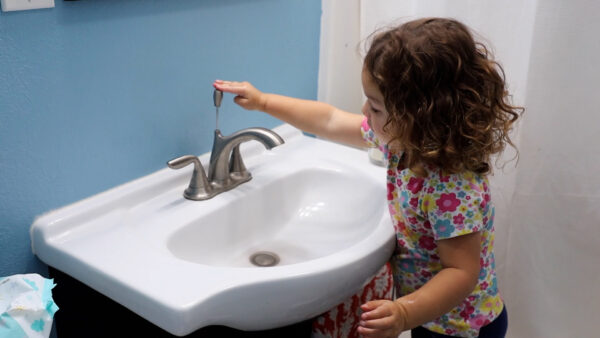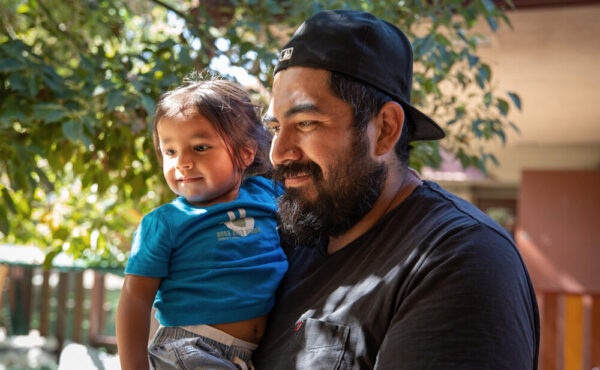
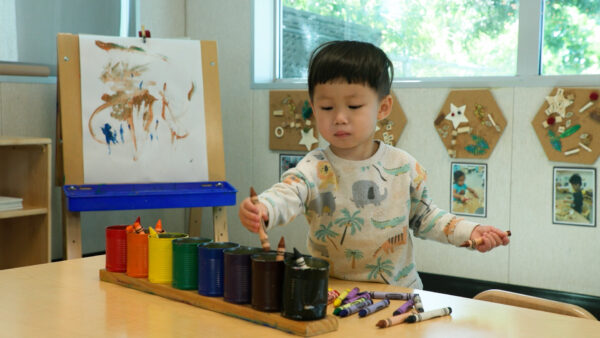
How do children build on their understanding that one action leads to another?
Children build on their understanding of cause and effect by making simple predictions about what will happen. They also reflect on what caused something to happen.
How are the children’s experiments connected to everyday experiences?
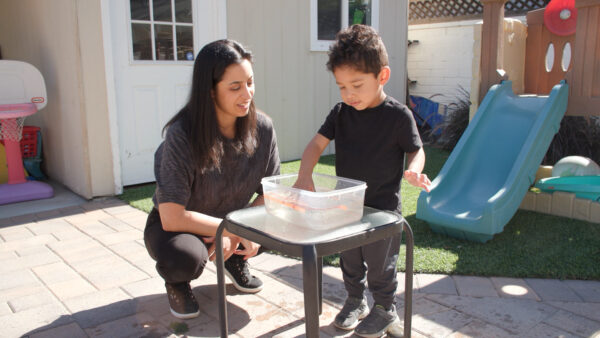
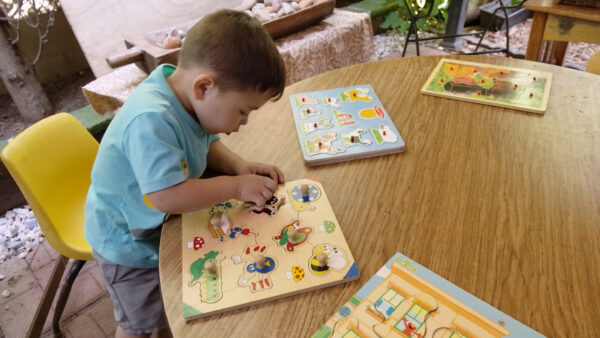
How do children develop their understanding of math?
Children develop their understanding of math by using number words, counting, recognizing shapes, and sorting objects into two or more groups.
How are the caregivers supporting children’s early math thinking?
Additional Videos
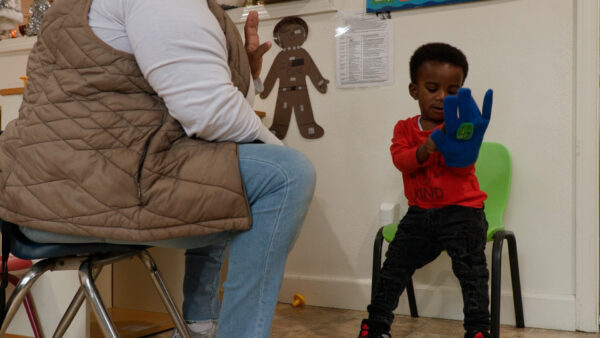
How do children build on their pretend play ideas?
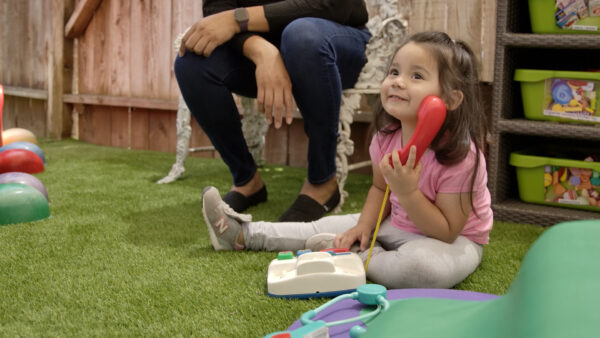
Children engage in more and more pretend play as they continue to develop an understanding that objects or actions can represent something else. They also imitate gestures, language, and actions with multiple steps.
What objects are the children using to enhance their pretend play?
Additional Videos
How do children predict routines, recall information, and communicate?
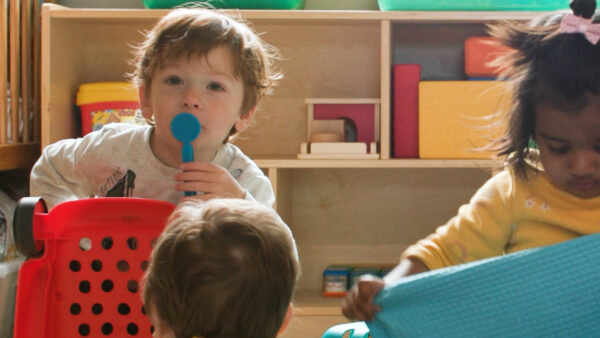
Children anticipate several steps in familiar routines, hold memories of people and their environment, and may communicate about recent past events or act them out.
What do you notice about the ways children checked in with caregivers as they engaged in routines?