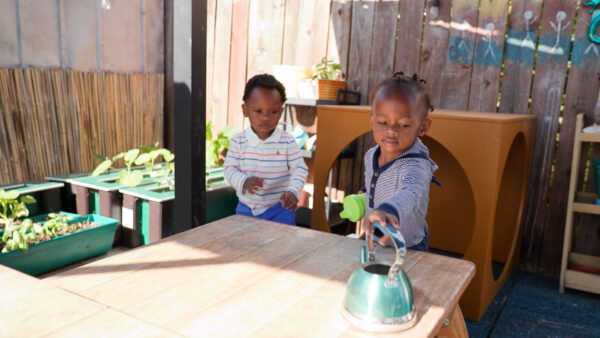
How do children learn to make things happen?
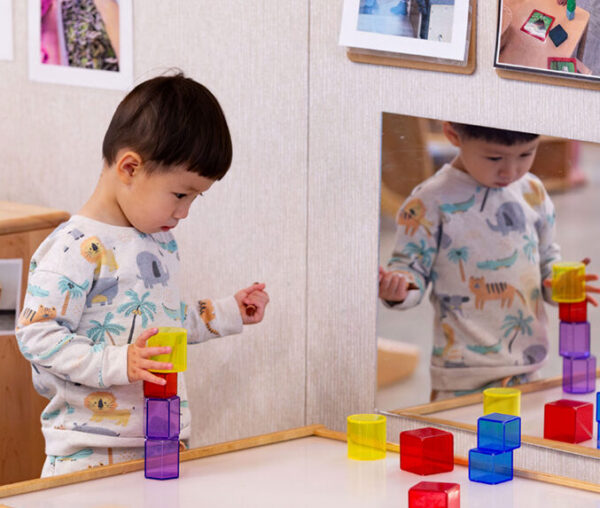
Children learn to make things happen through trial and error and by repeating simple actions. They learn how different objects fit together and move.
When do the children repeat an action, and when do they try a different action?
How do children sort and group information?
Children focus on similarities and differences to group and sort objects, and pay attention to and sometimes use language about mathematical ideas like “more” and “all.”
How is the children’s understanding of quantity connected to their everyday routines (for example, playing, cleaning up, and eating)?
Additional Videos
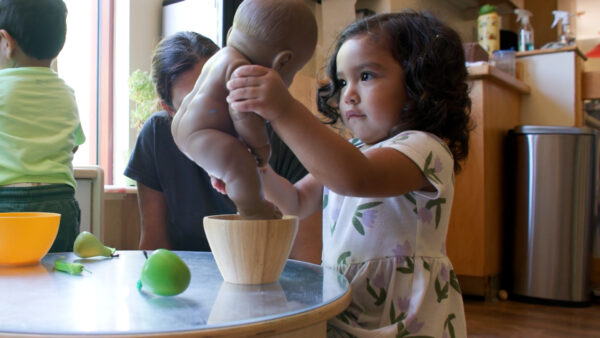
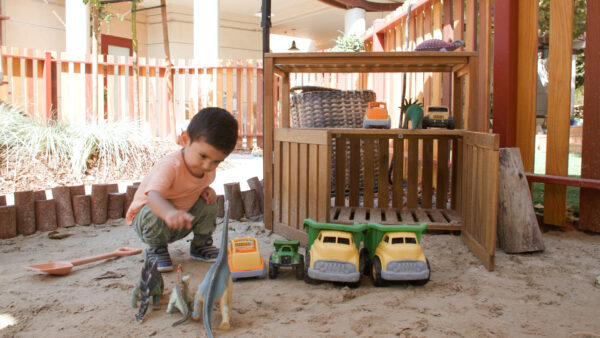
How do children do early forms of pretend play?
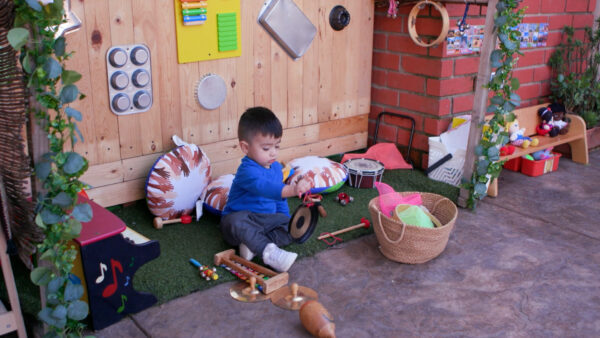
Children learn to pretend as they use one object to represent another object. They also imitate actions, sounds, or gestures that they have observed others doing in the moment or at an earlier time.
When might you notice children imitating something, and when might you notice children pretending one thing is something else (for example, pretending a block is a telephone)?
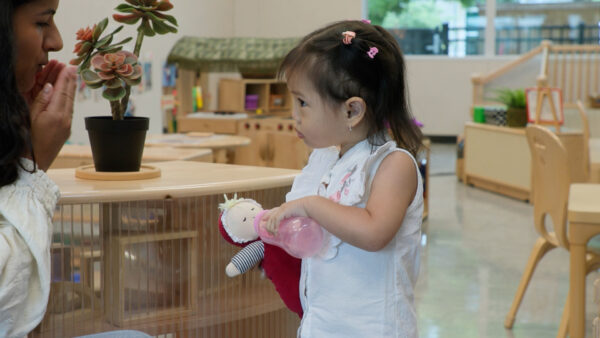
Additional Videos
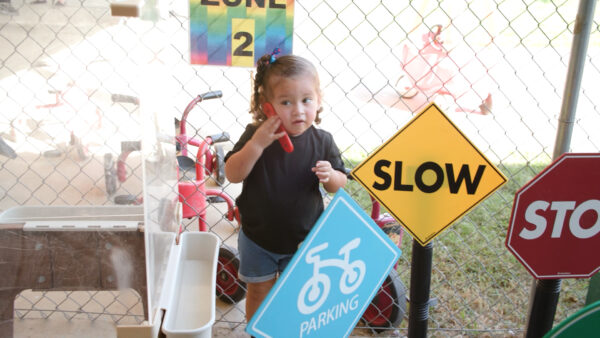
How do children's memories help them engage with others?
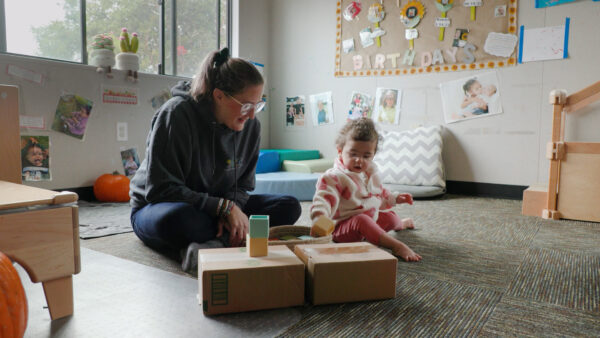
Children’s developing ability to remember information over longer and longer periods of time helps them know what to do as they interact with others and participate in routines.
How many steps in their routines did children remember before caregivers offered support?