
Domain
Language Development
Infants and toddlers are motivated to communicate their needs, share meaning with others, and learn about their world by interacting with their caregivers and communities. At birth, an infant’s brain is organized to develop language. Infants are ready to learn any language used by their caregivers and can learn more than one language at the same time.
Infants and toddlers learn to communicate using sounds, facial expressions, gestures and words. They develop language and early literacy skills by interacting with people around them. Experiences such as watching a parent signing words for favorite foods and toys; listening to grandmother telling a story; or turning the pages of a board book with a trusted caregiver, exploring the pictures, symbols, and pages, form the foundations of young children’s language development.
Why is Language Development Important?
Language provides children with a powerful tool to share their own thoughts and needs, build relationships, and learn information from others. Children’s developing abilities to understand and use language supports their overall learning and development. While exploring their environment, children learn language to describe new objects and actions. They often gesture to ask caregivers to label the new things they see. Infants and toddlers, who are in the process of developing their receptive and expressive communication skills, may use facial expressions, gestures, sounds, or words to communicate their social and emotional needs to others. Understanding and using language supports children in making sense of the world around them and strengthens their relationships with family members, peers, and others.
What Skills and Knowledge are Described in the Language Development Domain?
The skills and knowledge described in the Language Development domain are organized into the following three strands:
- Attending and Understanding
- Communicating
- Early Literacy
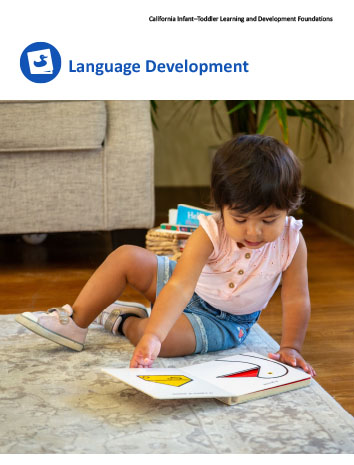
Foundations for birth–36 months
Open the strands below to explore how the foundations apply to age periods birth–4 months, 4–11 months, 11–23 months, and 23–36 months.
Strand 1.0Attending and Understanding
This strand describes how children develop the ability to make sense of language.
Age: Birth–4 Months
First Four Months
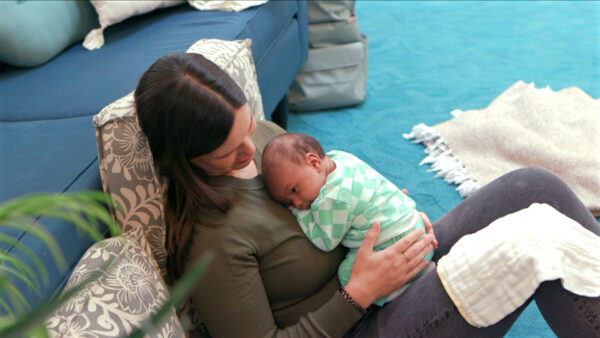
Infants develop their capacity to understand language through their very first interactions with their caregivers. Infants learn to distinguish between the stimuli in their environment, which over time allows them to determine the meaning of the communication from people around them. Some of the ways infants show a developing capacity to be attentive and understand in the first four months include the following:
- look toward or touch the face of someone who is interacting with them (for example, they may gaze at the face of a caregiver who is talking to them while feeding them a bottle)
- recognize the voices of familiar people who are caring for them (for example, they may smile when they hear a parent singing while rocking them)
- notice sounds in their environment (for example, they may turn to look toward a door that has been closed or startle after a falling object makes a loud noise)
Age: 4–36 Months
Foundations for ages 4–11 months, 11–23 months, and 23–36 months.
Foundation 1.1Being Attentive to Communication
Indicators
4–11 Months
Children focus on the face, hands, or voice of a person who is communicating with them. Children also increasingly follow another person’s gaze or gesture to look at objects and people.
A child who is blind may follow cues other than visual attention, such as sound or touch.
11–23 Months
Children follow another person’s gaze or gesture to look at objects and people, looking back and forth between the other person and the object of shared attention. Children show understanding of new words experienced through interactions and watching or listening to others.
A child who is blind may follow cues other than visual attention, such as sound or touch.
23–36 Months
Children listen to oral language or watch signed language to learn about objects, actions, people, and ideas.
Children show increasing ability to understand words, phrases, and sentences communicated to them or others, even when the object, action, person, or idea is not present.
A child who is blind may follow cues other than visual attention, such as sound or touch.
For example, a child may...
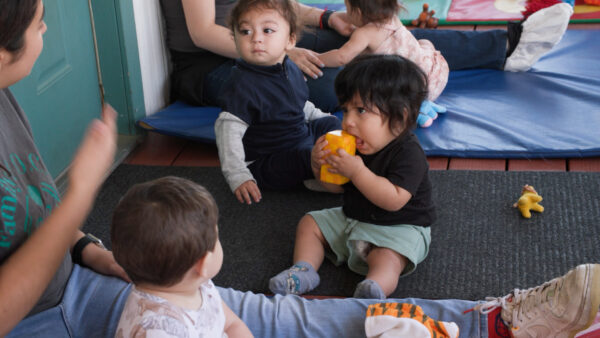
- Smile and look at the face of an adult who holds out a hat and communicates, “Let’s put on your hat before we go outside.”
- Watch the face and hands of an adult who is reading to them in American Sign Language (ASL).
- Look across the room when an older child points and says in Vietnamese, a language they share, “There’s the dog!”
- Coo when their grandmother says in a sing-song voice in Kumeyaay, “What is your name?” and says the child’s name in Kumeyaay.
For example, a child may...
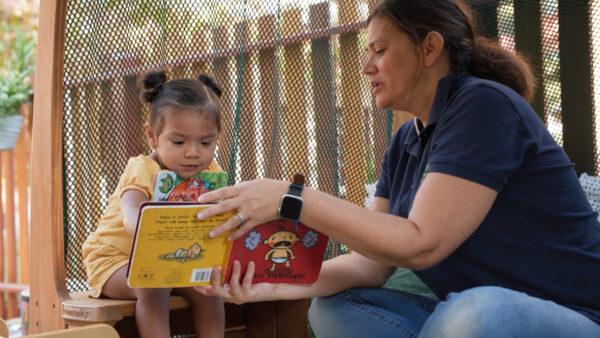
- Look from a caregiver to a blue hat, back to the caregiver, and then to a yellow hat as the caregiver asks, “Do you want your blue hat or your yellow hat?” while holding and showing each hat. The child then reaches for the blue hat.
- Look back and forth between an older child and a hand-sized rock sitting on a cubby shelf when the older child asks in Spanish, a language they share, “Do you want to see my new rock?” while gesturing toward the rock on the shelf.
- Move to look at a caterpillar on the ground after a care educator communicates in the child’s home language, “Come look at the caterpillar!” while pointing at the caterpillar.
- Look back and forth between a care educator, a bucket, and a sand shovel when the care educator communicates, “Should we play with this bucket and shovel?” holding up the objects as they say the words. When the care educator then asks, “Could I have the shovel?” and points at the shovel, the child says, “Shovel,” and hands the care educator the shovel.
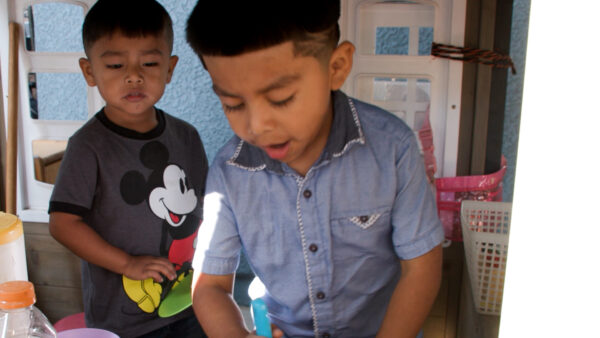
For example, a child may...
- Move to the other side of the room and pull a hat from the dress-up box when an older child communicates during play, “I’m gonna be the cook. Where’s the chef hat?”
- Say in Tagalog and English, “Nawala ni Dina jacket niya” (Dina lost her jacket) after overhearing a conversation between two care educators.
- Observe two other children who are holding scarves around their shoulders and pretending they are capes. Later, the child holds one of the scarves toward a care educator, requesting, “I want a cape.”
- Look toward a patch of grass and flowers when a caregiver gestures at it and says in Spanish, “Look, daisies!” When the caregiver asks in Spanish, “What does the daisy smell like?” the child walks to the flowers and sniffs a daisy, then turns back to the caregiver and smiles.
- Observe an adult who is struggling to open a lid and communicating, “I’m having trouble with this!” Later in the day, while trying to reach for an object, the child communicates, “I’m having trouble!”
Foundation 1.2Understanding Language
Indicators
4–11 Months
Children understand several familiar words and react to a caregiver’s overall tone.
11–23 Months
Children understand many words for familiar objects, people, and actions. Children demonstrate the ability to understand directions.
23–36 Months
Children understand many words about a variety of topics and learn new words after experiencing them only one or two times. Children understand others’ comments, questions, requests, or stories.
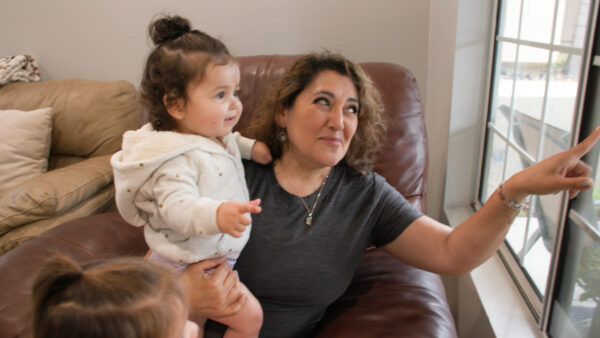
For example, a child may...
- Wave arms and kick legs in excitement when a care educator says in Spanish, “I have your bottle.”
- Smile and look toward the door when a care educator communicates in the child’s home language, “Look, Daddy is here!”
- Reach up when a family member asks, “Would you like to be picked up?”
- Look to a person who has just said the child’s name.
- Start to cry after a care educator yells, “Ouch!” after dropping something on the care educator’s toe.
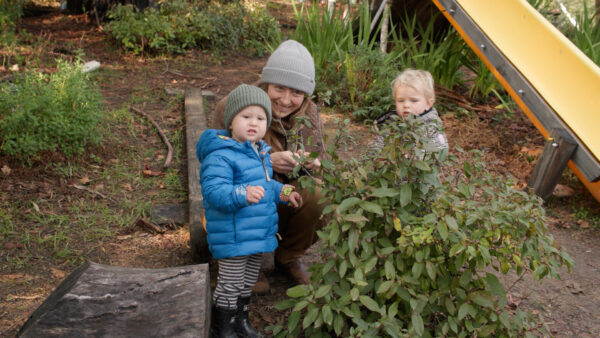
For example, a child may...
- Point to the milk carton when a care educator who is preparing lunch asks in Spanish, “What do you want to drink?”
- Look at a tree when a caregiver says in Cantonese, “Look! A squirrel!”
- Run away across the yard when a care educator communicates in the child’s home language, “It’s time to go inside.”
- Point to their own belly button when a care educator reads the line, “Where is the belly button?” in a favorite Spanish-language picture book.
- Pick up a ball and respond, “Here, ball,” when an older child asks, “Where is the ball?”
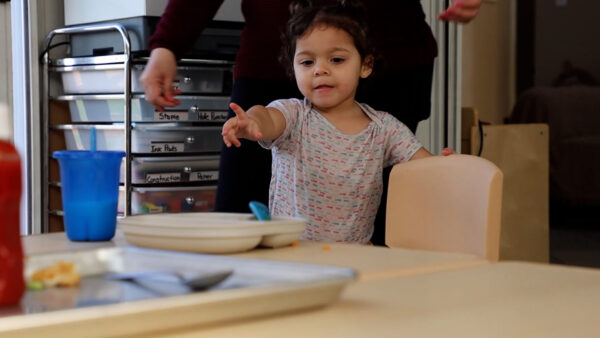
For example, a child may...
- Take a milk carton off a tray when a care educator serving lunch asks in Spanish, “It’s your turn to pick. Which drink do you want?”
- Put the apples in the bigger of two bowls while helping to make a snack when the care educator communicates, “After I wash the apple, put it in the big bowl.”
- Point to the bucket in a picture book and reply, “Yeah, here!” when a care educator asks, “Do you see the bucket in the picture? It looks just like our orange one.”
- Communicate, “elephant” and “penguin” with their augmentative and alternative communication (AAC) device after an adult asks, “What animals did you see at the zoo?”
- Get their boots and jacket when a care educator says in Tagalog, “It’s raining outside. We need to wear our coats and boots to play in the rain.”
- Move to the snack table after observing a care educator tell another person, “I’m going to put out snacks.”
Language Input for Deaf and Hard of Hearing Children
All children need to experience rich language input from infancy. For children who are Deaf or Hard of Hearing, it is particularly important to ensure they receive language input early in infancy. Deaf or Hard of Hearing children may receive early language input through sign language, even if their caregivers are still learning the language. Families who choose to use hearing aids or cochlear implants for their children may choose to use sign language alongside spoken language, or if their child receives their hearing aids or cochlear implant early in infancy, they may choose to use only spoken language.
Strand 2.0Communicating
This strand describes how children develop the skills to communicate through sounds, gestures, and words (oral and signed) and communicate back-and-forth with another person.
Age: Birth–4 Months
First Four Months
From the time they are born, infants produce sounds, such as cries and whimpers, to communicate their needs (Harding & Golinkoff, 1979; Zeskin & Lester, 1981). As children grow older, they learn to communicate, using gestures and words, and engage with others in conversation. Before they reach this level of development, some of the ways infants communicate and interact in the first four months include the following:
- cry to express their needs or express discomfort (for example, they may cry when hungry or tired).
- make cooing sounds with their mouths, both in response to others and when alone (for example, they may coo “ahhh” in response to a caregiver saying “Hello, baby,” or coo “oooh” while lying by themself on a blanket).
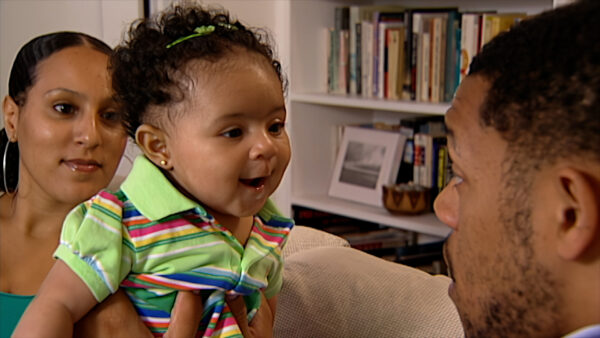
- respond to another person in a back-and-forth manner, almost like a conversation (for example, they may squeal or giggle in response to a caregiver talking to them or making silly faces, or they may respond, “ah” after a caregiver says, “ah,” as if having a conversation).
Age: 4–36 Months
Foundations for ages 4–11 months, 11–23 months, and 23–36 months.
Foundation 2.1Communicating and Speaking
Indicators
4–11 Months
Children experiment with and practice making sounds or hand shapes. Children use sounds or gestures to communicate needs, wants, and interests.
Children who are developing in sign languages will babble by moving their hands in sign-like shapes.
11–23 Months
Children use several words for people they know, objects they use, and actions they perform in their daily lives. Children use gestures and a few words to tell others about their needs, wants, and interests.
Children who do not yet use speech or signs to express themselves may use augmentative and alternative communication (AAC) devices, such as card systems, communication boards, or tablet-based programs.
23–36 Months
Children use vocabulary about a variety of topics. Children communicate in a way that can be understood by a familiar person who speaks or signs the child’s language.
Children also combine words into two- or three-word sentences and modify some words (for example, changing verbs to past tense) but with many inaccuracies.
Children who do not yet use speech or signs to express themselves may use AAC devices, such as card systems, communication boards, or tablet-based programs.
For example, a child may...
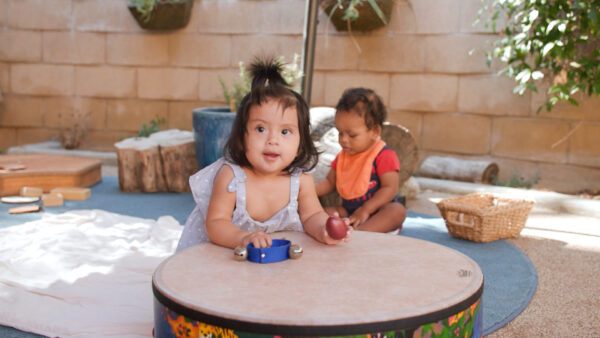
- Open and close their hand in response to a caregiver who is signing to them in American Sign Language (ASL).
- Lift arms and vocalize to communicate to a caregiver the desire to be held.
- Vocalize to get attention from a family member.
- Babble, “da da da da” while playing.
- Clap their hands after dumping objects out of a container.
For example, a child may...
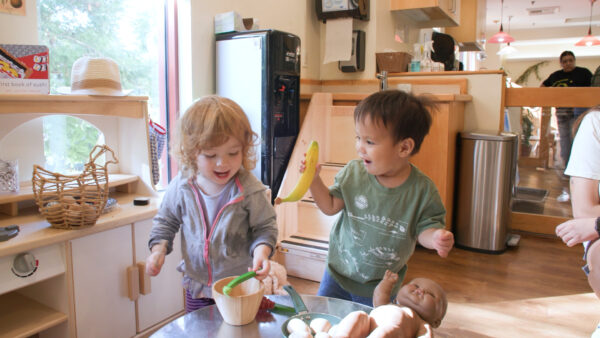
- Sign “cracker” in ASL to request more crackers at snack time.
- Point to the sky and communicate “moon” on their AAC device when the moon is visible.
- Say in Samala, “Swe’ swe” (Sleep, sleep) while covering a teddy bear with a blanket.
- Say, “¿Vamos parque?” (Go to park?) in Spanish while gesturing to a photo of the family at the park.
- Say, “See Pampa” (the child’s approximation of “Grandpa”) while tugging on a caregiver’s hand, indicating that they want to go to their grandfather, who is in the next room.
For example, a child may...
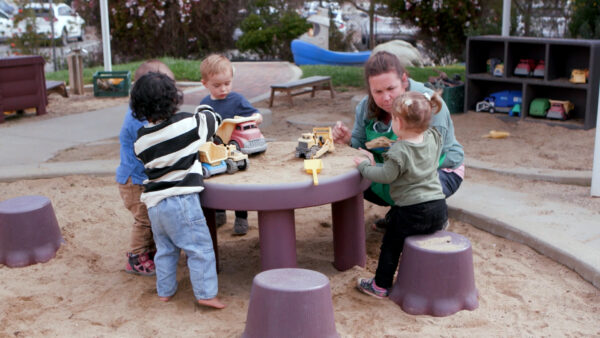
- Sign, “More crackers, please,” in ASL to request more crackers at snack time.
- Ask a caregiver in Cantonese, “呢個係乜嘢?” (What’s this?) while pointing at insects in a garden.
- Comment, “She falled down,” when explaining why another child is crying.
- Yell in Vietnamese, “Tới phiên tớ” (It’s my turn!) to another child at the top of a slide.
- Tell a care educator in Spanish, “Me gusta rojo” (I like red) when picking out colors for painting.
- Make a request by saying in English and Spanish, “I need ayuda” (I need help) to a parent.
Foundation 2.2Emerging Conversation Skills
Indicators
4–11 Months
Children participate in back-and-forth communication through gestures, facial expressions, and sometimes limited verbal responses.
11–23 Months
Children use gestures, words, or babbles to respond to communication from another person or to start conversations with that person.
Children who do not yet use speech or signs to express themselves may use augmentative and alternative communication (AAC) devices, such as card systems, communication boards, or tablet-based programs.
23–36 Months
Children engage in back-and-forth conversations in which they respond to another person about the same conversational topic in general.
Children who do not yet use speech or signs to express themselves may use AAC devices, such as card systems, communication boards, or tablet-based programs.
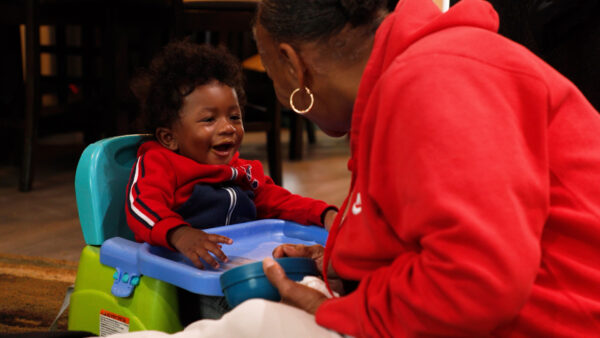
For example, a child may...
- Make cooing sounds back and forth with a caregiver who is holding them face-to-face and talking to them.
- Babble back and forth with a caregiver during a diaper change.
- Put their arms up above head when a caregiver says in Vietnamese, “Soooo big.”
- Try to get a caregiver to play peekaboo by hiding their own face behind a blanket, uncovering their face, and laughing.
- Try to clap hands to get a caregiver to continue playing a hand-clapping rhyme in English, “Pat-a-Cake,” or a finger-play rhyme in Spanish, “Cuando vayas a la carnicería” (“When You Go to the Butcher Shop”).
- Flap their hands in the air while a caregiver sings a finger play song, such as “包饺子” (Making Dumplings) in Mandarin or “The Itsy Bitsy Spider” in English.
- Open and close their mouth trying to imitate a caregiver after the caregiver blows a raspberry (making a sound by sticking out their tongue and blowing).
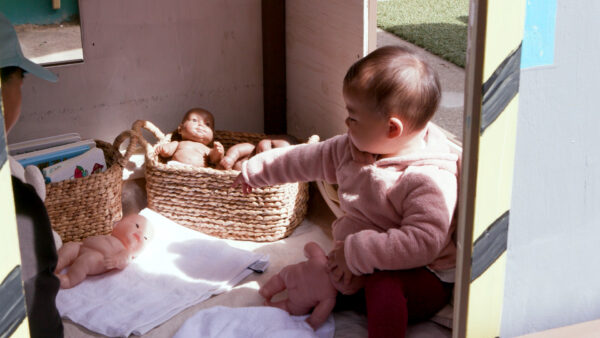
For example, a child may...
- Shake their head or express “no” when a caregiver asks if the child is ready to go back inside.
- Hold a favorite toy out to a caregiver as if asking to play. When the caregiver asks, “Should we play with this?” bounce up and down excitedly in reply.
- Communicate “cheese” using a card communication system when a care educator asks in the child’s home language, “What would you like with your snack today, cheese or yogurt?”
- Say in Spanish, “Adios, mamá” (Bye-bye, mama) and “Adios, papá” (Bye-bye, dada).
- Babble into a toy phone, pausing from time to time as if listening to someone on the other end.
- Respond to a caregiver’s comment about an object with a related action or comment. For example, make a barking sound after a caregiver says, “Nice doggie,” in Tagalog while patting a toy dog.
- Reply in Mandarin, “熊” (Bear) to request a favorite story, 棕熊,棕熊,你看到了什么? (Brown Bear, Brown Bear, What Do You See?) after a caregiver asks, “你想看书吗” (Would you like to read a book?).
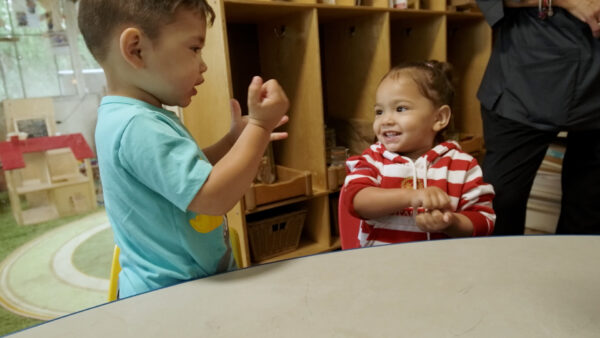
For example, a child may...
- Tell a caregiver, “It flied.” When the caregiver responds, “It flew? What flew?” the child replies, “The bird.”
- Say in Tagalog and English, “Pusa ko yan. At rainbow. Love ko ang rainbow” (That’s my kitty. And a rainbow. I love rainbows) while gesturing to scribbles they have made when asked, “Ano yang drawing mo?” (Can you tell me about your drawing?).
- Reply in Spanish, “Allí” (Over there) and point to the corner when a care educator asks, “¿Adónde está?” (Where did it go?). When the care educator then replies, “¿Vamos a buscarlo?” (Should we go look for it?) the child responds, “Sí, vamos,” (Yeah, come on) and holds out their hand for the care educator to hold.
- Nod to indicate “yes” when a care educator asks if the child would like to use the paint on the table. When the care educator asks the child what color they would like, the child points to the blue paint. After the care educator confirms, “You’d like the blue paint?” the child nods again.
- Ask a child who is sitting next to them and eating oranges, “Do you like oranges?” When the second child replies, “Yeah,” the first child responds, “I got yogurt.”
Strand 3.0Early Literacy
This strand describes how infants and toddlers learn to engage with books, stories, songs, and rhymes and begin to make meaning of these literacy experiences. While infants and toddlers are not learning to read yet, they are learning about print and how stories, songs, and rhymes are a way of creating shared experience and knowledge.
Age: Birth–4 Months
First Four Months
In the first four months of life, children’s responses to books, stories, songs, and rhymes look similar to their responses of attending to and understanding other language-related experiences. Some of the early ways infants engage with literacy include the following:
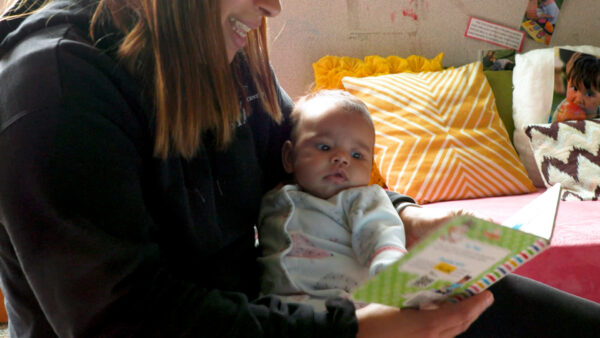
- watch or listen to the experience of a caregiver signing or telling them a story, reading to them, or showing and communicating about a book (for example, they may gaze at the face of a caregiver who is telling a story or reading a book, or they may reach to touch a book)
- respond to songs that are sung to them (for example, they may make cooing sounds in response to a song or become relaxed when experiencing a lullaby)
Age: 4–36 Months
Foundations for ages 4–11 months, 11–23 months, and 23–36 months.
Foundation 3.1Engagement With Books, Stories, Songs, and Rhymes
Indicators
4–11 Months
Children watch or listen to a caregiver who is signing or telling a brief story, reading a short book, or signing or reciting a song or rhyme. Children explore books and pictures together with a caregiver.
11–23 Months
Children watch or listen to a caregiver who is signing or telling a story, reading a book, or signing or reciting a song or rhyme. Children interact with books (such as holding, exploring covers and pages, or showing the book to a caregiver). They also participate by pointing at a book, flipping pages, or making one- or two-word comments.
23–36 Months
Children engage with storytelling, books, songs, or rhymes by watching or listening, asking short questions, and making comments. They demonstrate basic understanding of how to interact with a book, such as turning the pages. Children also demonstrate an emerging understanding that written text represents words.
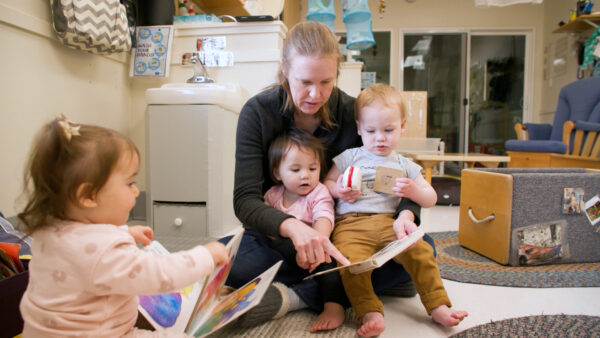
For example, a child may...
- Make sounds and wave their arms in excitement when a caregiver is reciting a song or nursery rhyme.
- Hold a book and touch the pages while a caregiver describes what is on the pages.
- Watch a caregiver who is signing a story in American Sign Language (ASL).
- Coo and babble in response to a caregiver who is singing a lullaby or telling a story to the child.
- Chew on a board book while a caregiver reads the book.
- Rub the page of a touch-and-feel book while a caregiver reads the book.
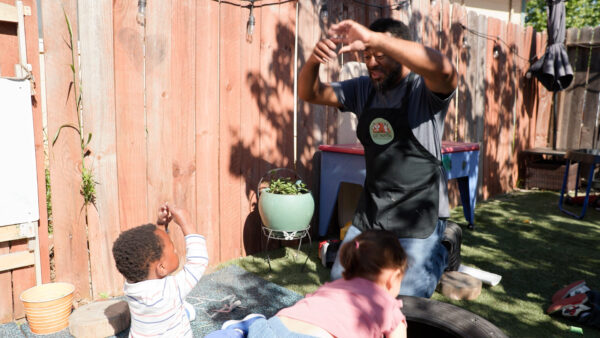
For example, a child may...
- Make hand motions as part of an interactive rhyme, such as clapping during a rhyme in Spanish, “Tortillitas para mamá” (“Tortillas for Mama”) or moving their hands during a song in English, “The Wheels on the Bus.”
- Attempt to turn the pages of a book, turning more than one page at a time and turning pages in different directions.
- Bring a caregiver a favorite book to read.
- Open a book using a craft stick a caregiver has taped to the cover to aid the child in their fine motor skills.
- Communicate “soft” while touching a fuzzy page in a touch-and-feel book.
- Hold out their arms to indicate “big” when a caregiver who is telling a story says, “Show me how big you think the fish was.”
- Point to a seashell when a caregiver asks in Mandarin, “Do you see the seashell? Where is the seashell?” while reading a seek-and-find book.
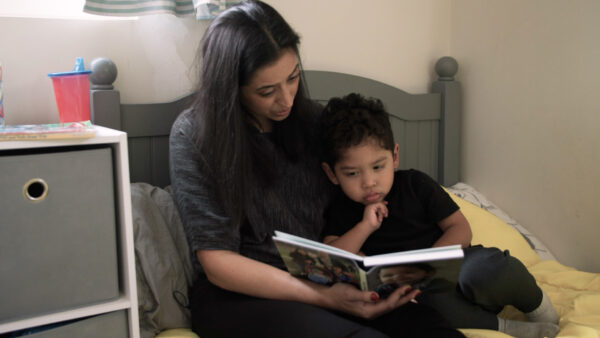
For example, a child may...
- Sing along with a few repetitive words in the chorus of a familiar song.
- Use their finger to flip the pages on a screen back and forth on an accessible device they are learning to use.
- Count in Mandarin, “一二三” (One, two, three) together with a caregiver and other children as they count objects on a felt board as part of a nursery rhyme.
- Communicate their favorite line of a story they have experienced many times when a caregiver pauses while telling the story.
- Pretend to read a book to a younger infant or stuffed animal by communicating about the pictures on each page and turning the book around to show the picture.
- Examine the text on the back of a cereal box and ask, “What’s this says?” demonstrating an understanding that the text represents words.
Providing Accessible Print Materials
Children who are blind or have low vision should receive daily opportunities to engage with books and print. Caregivers can provide these opportunities by engaging children with touch-and-feel books, books with large print or braille, picture books accompanied by life-sized objects representing the images in the book, or audiobooks.
Foundation 3.2Understanding Meaning From Books and Stories
Indicators
4–11 Months
Children watch or listen to a caregiver who is signing or telling a brief story, reading a short book, or signing or reciting a song or rhyme. Children explore the pictures and pages of a book while a caregiver reads.
11–23 Months
Children make connections between words or events in stories or books and in real life. Children participate in storytelling and reading by making one- or two-word comments or pointing to pages in a book while babbling, showing an understanding of elements in the story.
23–36 Months
Children show a basic understanding of the main idea or subject of a story or book they have experienced many times.
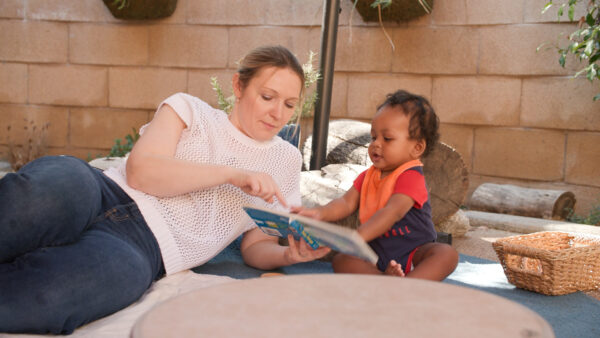
For example, a child may...
- Pat the page of a book while a caregiver reads.
- Watch or listen to a caregiver who is signing or telling a story.
- Lift the flaps of an interactive book while a caregiver reads, although not always at the appropriate time in the book.
- Focus on a caregiver who is wiggling the child’s fingers while singing a familiar rhyme in Spanish, “Este dedito compró un huevito” (“This Little Finger Bought an Egg”).
- Look at pictures that a caregiver points to while reading a book.
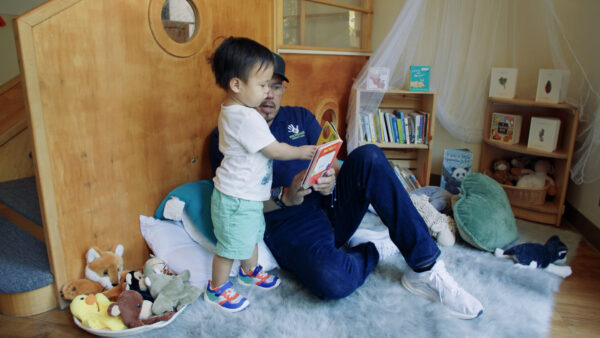
For example, a child may...
- Pat an illustration of a character’s hat and communicate, “hat,” then pat their own head.
- Bounce up and down during their favorite part of a familiar story.
- Say or sign familiar words in their home language, such as “cup” or “bed,” when experiencing the illustrations in a book.
- Pretend to fall down and roll on the floor when a character in a familiar story falls down.
- Point to their ears, nose, and mouth when a caregiver points to pictures of each body part in a book about bodies and faces.
- Communicate, “moon,” while patting an illustration showing a moon through a window, then look to the window of their own room for the moon.
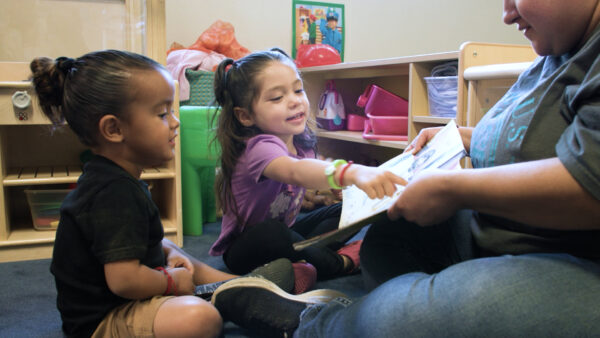
For example, a child may...
- Point to the illustration of a character in a familiar book while a caregiver is reading. Communicate, “He’s doesn’t like the eggs,” demonstrating an understanding of the message repeated throughout the book.
- Ask a caregiver in the home language to read “the ballerina book,” which is a book about a girl who is learning ballet that is one of the child’s favorites.
- Move across the room making engine sounds after experiencing a book about vehicles several times.
- Communicate in Spanish, “¡Chistoso!” (Silly!) after experiencing a funny story many times.
- Make roaring sounds while a caregiver tells a folk tale about a bear, which the child has previously experienced several times.
- Giggle and move their legs while a caregiver reads the line, “legs that dance away” in the book Brown Sugar Baby, which the two have read together several times.
Storytelling Traditions
Many cultures have a rich tradition of storytelling. Experiencing stories, folk tales, and rhymes invites children to engage with literacy in a way that can connect them with cultural practices in their families and communities. Storytelling traditions are often called “oral storytelling” to highlight that the stories are passed down as they are told, but storytelling may be through spoken or signed language.