
Domain
Approaches to Learning
The Approaches to Learning (ATL) domain describes the development of important skills and behaviors that help infants and toddlers learn, play, and engage with others. The skills include the development of curiosity, initiative, engagement and perseverance, executive function skills, problem-solving, and collaborative-effort skills. Each day is a new adventure for infants’ developing minds and bodies and an opportunity for adults to connect with them and help grow their ATL skills and behaviors through responsive interactions. Secure relationships with caregivers and responsive interactions promote engagement and allow children to feel emotionally and physically safe so they can explore and learn at their best.
Why is Approaches to Learning Development Important?
Approaches to learning (ATL) skills and behaviors set the foundation for lifelong learning habits. The early development of ATL skills influence how children continue to learn, problem-solve, overcome challenges, and collaborate with others. Executive functions are cognitive processes that contribute to problem-solving, planning, focusing, and managing behavior. Children rely on executive functions as they transition through school, encounter challenges, and form relationships with others.
What Skills and Knowledge are Described in the Approaches to Learning Domain?
The skills and behaviors described in the Approaches to Learning domain are organized into the following three strands:
- Motivation to Learn
- Executive Functioning
- Goal-Directed Learning
Foundations for birth–36 months
Open the strands below to explore how the foundations apply to age periods birth–4 months, 4–11 months, 11–23 months, and 23–36 months.
Strand 1.0Motivation to Learn
This strand describes how infants and toddlers develop curiosity, initiative, engagement, and perseverance. These skills and behaviors motivate children to keep learning new things. Infants and toddlers show these skills and behaviors through their actions, visual preferences, and vocalizations.
Age: Birth–4 Months
First Four Months
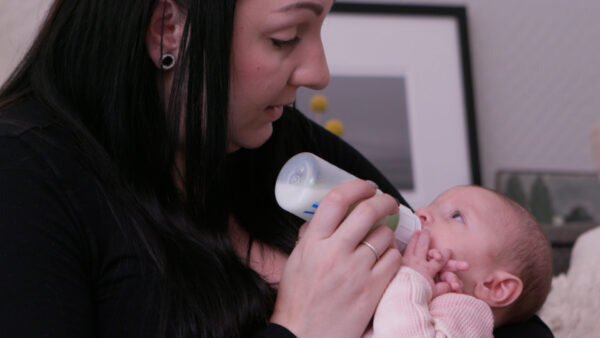
Within the first few weeks of life, young infants’ behaviors give us an insight into early skills and behaviors related to Motivation to Learn. We can see infants as motivated to learn through their developing curiosity, initiative, engagement, and persistence. For instance, when a young infant is gazing into a caregiver’s eyes in the early weeks of development, we get a glimpse into the development of curiosity and initiative. They begin to demonstrate these skills by showing interest in the world around them. In the first four months, young infants may show motivation to learn by how they engage in the following:
- attend to faces of familiar caregivers or orient toward them in other ways (for example, turn their head to get a better view of a familiar caregiver)
- react to loud sounds or sudden movements
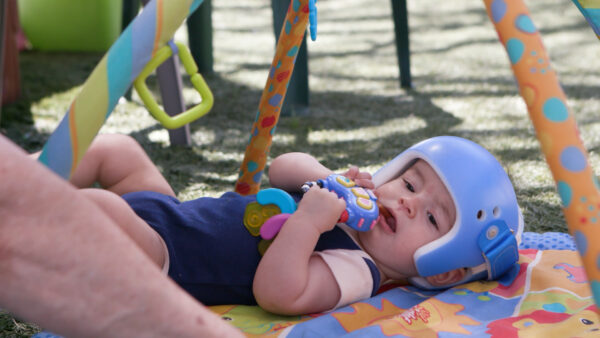
- explore what they can do with their mouth and hands
- follow or track objects
- try to reach toys by swinging their arms at them
- try to push up using their body
Age: 4–36 Months
Foundations for ages 4–11 months, 11–23 months, and 23–36 months.
Foundation 1.1Curiosity and Initiative
Indicators
4–11 Months
Children explore objects or materials using their senses (mouthing, touching, looking, listening) and repeat the same action multiple times. Children also attend closely to details about things around them.
11–23 Months
Children explore by seeking information (using gestures or some words or vocalizations) and purposefully test cause-and-effect through simple actions. Children also show interest in participating in new experiences or activities.
23–36 Months
Children use a variety of strategies to explore and seek information, such as making observations and asking questions. Children also pay attention to things around them more closely.
For example, a child may...
- Stare and smile or laugh in response to a familiar persons’ exaggerated expressions (such as a change in tone of voice and new gestures).
- Dump play fruit out of a basket and then dump out a second basket to explore what happens.
- Grab different textured books and put them in their mouth.
- Drop their sippy cup from their highchair, watch it fall to the floor, and drop it again once the caregiver hands it back to them.
- Look toward an older child and smile while clapping their hands when they hear the child sing in Mandarin, “七色光之歌” (“The Song of Sunlight”) or the “Wheels on the Bus.”
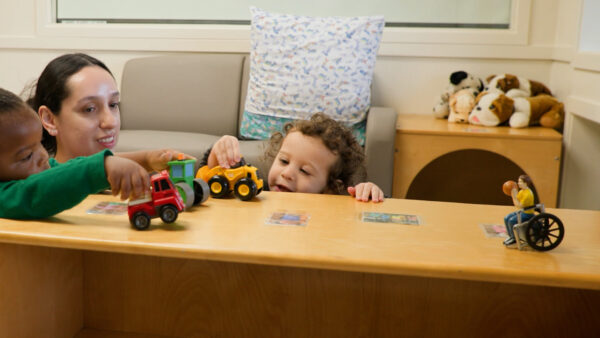
For example, a child may...
- Point to an older child who is playing with a toy firetruck, join the child while observing what they are doing with the toy firetruck, and imitate the older child.
- Turn a sand bucket upside down to show a familiar person what they have and say “Drum!” as they begin to use the sand bucket like a drum.
- Grab a ball to put on the ball run; look for other objects to put down the ball run, like toy cars and shapes from the shape sorter; signal for “help” when a shape gets stuck in the ball run; and then continue to try to put the shape in the ball run with the caregiver.
- Take the new child-safe animal magnets one by one off the fridge and place them back on the fridge, then try sticking them on a wooden cabinet. Once they fall off the wooden cabinet, the child goes back to placing them on the fridge.
- Approach a person preparing a snack and grab a pot and spoon to “prepare a snack,” too.
- Eagerly try a new activity, using crayons and making marks on paper.
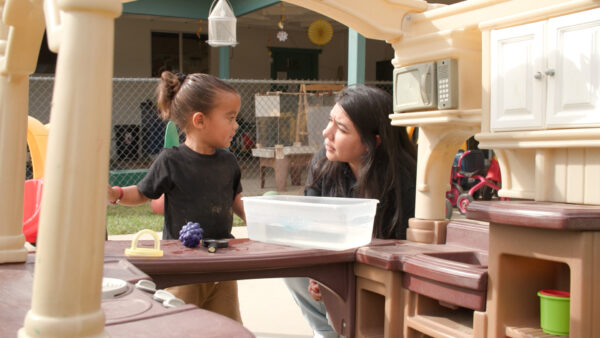
For example, a child may...
- Ask, “Where Ricardo go?” when they notice Ricardo getting picked up by their family member.
- Communicate in American Sign Language (ASL), “Rock?” when they hold up a large woodchip to show their peer while playing outside.
- Notice a dog eating food in a picture book and ask a caregiver if the dog is hungry.
- Drop rocks, sticks, and leaves in the water during supervised play to observe whether they float back up or sink.
- Spend time looking at blooming flowers in the outdoor garden area with peers and communicate in their home language, “Look a ladybug!”
- Ask questions like, “What is that?”
All Children Are Curious Learners
To recognize progress in the development of infants and toddlers, it is important to be aware of the different ways they express their curiosity and initiative. For instance, an infant who is more inclined to visually observe versus explore by touch is no less curious than the infant exploring by touch. Some toddlers are more curious about people, whereas other toddlers are more curious about exploring the physical world (Lee et al., 2023). Children are unique and express their skills in their own ways.
Foundation 1.2Engagement and Perseverance
Indicators
4–11 Months
Children try to make things happen and repeat actions they find interesting. Children also express distress when they are stopped from doing something and express pleasure when they accomplish simple goals.
11–23 Months
Children spend time trying to accomplish goals and express pleasure or pride when successful. Children also sometimes continue working through an activity with caregiver support.
23–36 Months
Children spend more time working through tasks to master them. With caregiver guidance, children find several ways to cope with distress that arises when they encounter challenges.
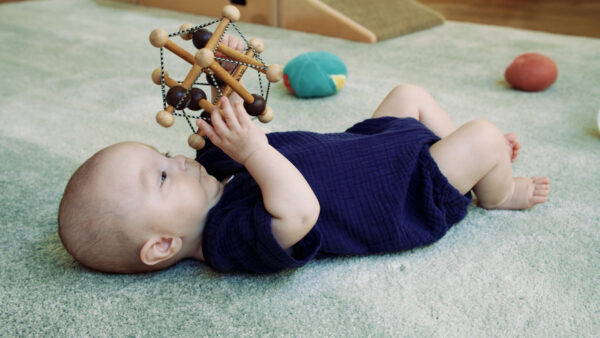
For example, a child may...
- Continue to try to reach for an object that a caregiver puts in front of them.
- Use a plastic toy hammer to push a tennis ball around again and again.
- Put a toy into a small container and shake it and when the toy falls out, express frustration and drop the container. The child may then get the toy and put it back in the container and express pleasure.
- Cry loudly and try to reach for a toy that a caregiver removed because it broke and was not safe to play with.
- Open a drawer and repeatedly take out plastic lids.
- Smile at a familiar person and express excitement when the person smiles back and then continue to smile. When the familiar person turns to talk with another person, the child makes a loud noise to try to get the person’s attention again.
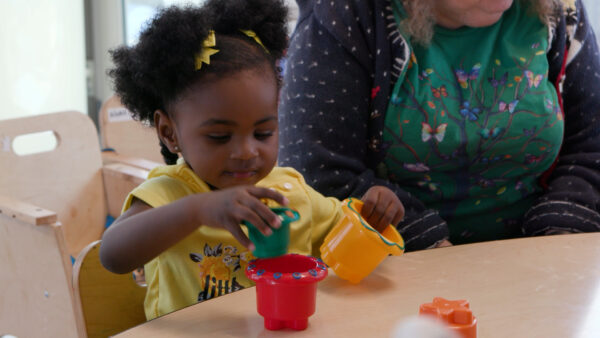
For example, a child may...
- Continue to try to reach for a ball that is under the couch, reaching their hand as far as they can and then crying. The caregiver reaches for the ball and places it within the child’s reach, when the child grabs the ball, they clap and smile.
- Spend time placing most of the shapes into the shape sorter and then struggle to get the star to fit, continuing to try to insert the star. The caregiver gently turns the star, and the child then finishes pushing the star in and smiles.
- Continue to look for a specific ball at the bottom of the toy basket, pulling out large and small toys until they find the ball they were looking for.
- Try to grab repeatedly a hand-sized rock that is stuck in the dirt. Once they get the rock, they eagerly show another child.
- Get frustrated when the sand tower they are building continues to fall and almost give up. With the help of a caregiver, they mix water with sand and continue building the tall tower.
- Bring a spoonful of food to their mouth and when it falls before reaching their mouth, they try again. When they get the food in their mouth, they look at a person and gesture, “Mm mm yum!”
For example, a child may...
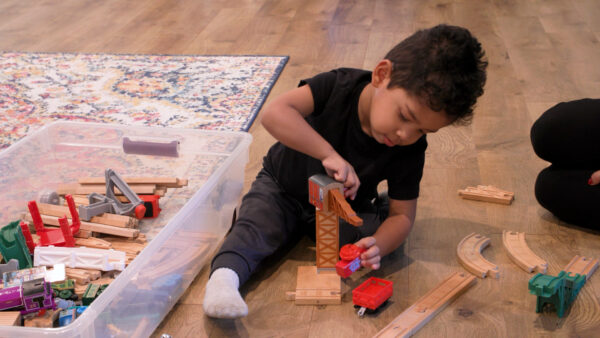
- Get frustrated that they cannot reach a block under a piece of furniture. The caregiver asks them, “What can you use to get the block?” The child goes to grab a toy broom to push the block from under the furniture piece.
- Try to push their foot into their shoes repeatedly before playing outside, with caregiver support.
- Spend time rebuilding a block structure that fell over. When a caregiver tries to help, they react in Cantonese, “唔駛! 我” (No! I can).
- Return to a block building they were creating the previous day to try to make it bigger.
- Use their augmentative and alternative communication (AAC) device to ask for help finding a lost puzzle piece after they have looked for the missing puzzle piece for a few minutes.
- Climb a slide but continue to slip, expressing frustration as they continue to try; then they may hold on to the edge of the slide to try to pull themselves up as they climb.
Strand 2.0Executive Functioning
This strand describes how infants and toddlers develop their executive functions, inhibitory control, working memory, and cognitive flexibility. These skills support children in problem-solving, planning, and accomplishing goals. Children express their executive functions through their interactions with others, during play, and when engaging in routines.
Age: Birth–4 Months
First Four Months
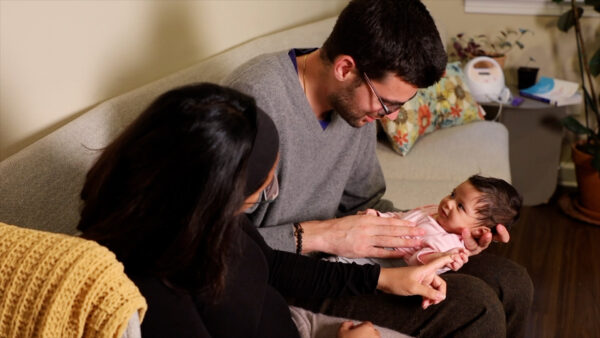
During early responsive interactions, such as crying for food or comfort and getting those needs met, important relationships are formed. These relationships serve as a foundation for developing Executive Functioning. For instance, through coregulation, young infants become soothed by caregivers. Young infants also show early executive functions as they adapt to routines and engage in simple back-and-forth interactions. In the first four months, young infants may show the foundational development of executive functions by how they engage in the following:
- attend to faces and voices of familiar caregivers or orient toward them in other ways (for instance, turn their head toward the room that they hear a familiar caregiver’s voice coming from)
- attend to things in their environment (for instance, prefer to look at things with visual contrast, like a black-and-white picture of a ladybug in a book)
- recognize and show comfort in response to a familiar caregiver’s voice, face, or touch (for example, stops crying when hearing a soft familiar voice)
- remember the sound of their caregiver’s voice (for example, smiles when they hear their caregiver singing to them)
Age: 4–36 Months
Foundations for ages 4–11 months, 11–23 months, and 23–36 months.
Foundation 2.1Attention
Indicators
4–11 Months
Children are easily distracted and shift their attention to different things and people. Children also follow another person’s attention to things in their environment.
11–23 Months
Children demonstrate some ability to maintain attention in highly predictable routines. Children switch focus back and forth between a person and the thing that the person is referring to.
23–36 Months
Children demonstrate some ability to manage distractions and attention, with caregiver guidance. Children pay attention more carefully and to more than one thing at a time in an orderly and predictable environment.

For example, a child may...
- Look at a familiar person who is singing to them as they are getting their diaper changed.
- Explore a toy by banging, mouthing, or looking at it. Drop the toy when they notice other children playing with a ball.
- Play with a baby gym after following the caregiver’s gaze to it.
- Focus on a bright stuffed animal that is just out of reach while repeatedly reaching for it. Stop reaching for it when they notice a bright toy car.
- Stare at the play of older children during drop-off and not immediately notice their family member leaving.
- Stop feeding when they hear a noise, then turn their head toward before settling back into feeding.
For example, a child may...
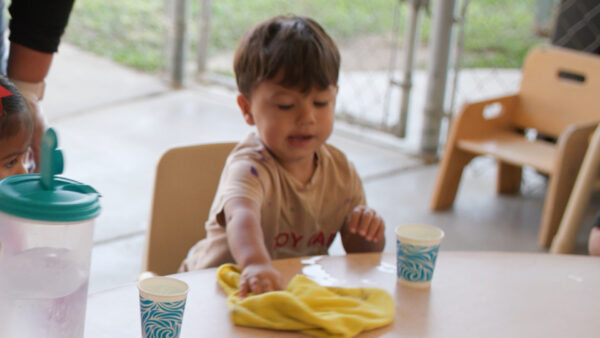
- Take a book to the caregiver, glance at the book, sit on the caregiver’s lap, glance back at the book, and then glance back to the caregiver again. The child then may turn the page of the book when the caregiver asks them to.
- Maintain focus on building a tower with cups, carefully picking up one cup at a time to place it on the other cups.
- Expect favorite songs or rhymes, like a song in Spanish, “Pin Pon es un muñeco” (“Pin Pon Is a Doll”), or a nursery rhyme in English, “Humpty Dumpty,” to be sung the same way each time and protest if the familiar person changes the words.
- Stop playing with the toy cars briefly to help clean up when they hear, “It’s clean-up time,” and then return to play with the toy cars. After another reminder, they help put away the toy cars with the caregiver.
- Get flustered and have difficulty settling back into their previous activity after a fire drill and need comfort from a familiar care educator. The child then transitions back to activities as they normally would.
- Spend some time focusing on the toy cars they are using to go over a pretend bridge before moving on to another activity.
For example, a child may...
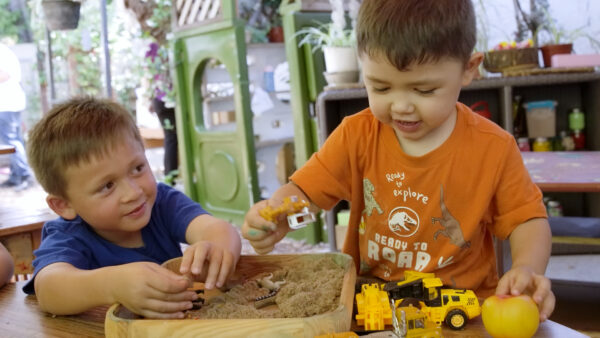
- Engage in a short story that is read by an elder or caregiver by asking follow-up questions.
- Maintain focus while building a block tower with another child. The child may wait and see where the other child is placing the block before they place their block.
- Find another activity to do, like playing in the pretend kitchen or with cars, when the caregiver asks them to find a play activity because the caregiver is preparing snacks and cannot play with them.
- Spend time scribbling on a piece of paper and communicate to the caregiver that they drew a dog while other children nearby are painting, and then they rush through the last part of their drawing to join the children painting.
- Continue playing with their favorite ball outdoors while at the same time responding to the caregiver’s question about whether they want a drink of their water.
Foundation 2.2Inhibitory Control
Indicators
4–11 Months
Children react when having to wait for needs to be met (such as arching their back and crying or other signs of discomfort or distress). Children respond to being soothed by caregivers.
11–23 Months
Children stop or adjust their actions in response to cues from others (such as facial expressions or gestures) and consider choices with caregiver support to manage their impulses and behaviors.
23–36 Months
Children communicate more specific information about their wants or needs and adjust their actions to manage their impulses and behaviors, with caregiver guidance.
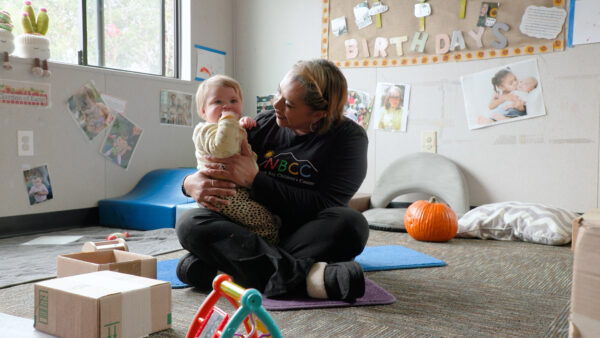
For example, a child may...
- Cry loudly while waiting for a familiar caregiver to prepare their bottle. Stop crying once they have the bottle.
- Reach for their sippy cup on a table, and when a person calls their name, they stop for a moment before continuing to reach for their cup.
- Crawl toward the door when another child is being picked up to go home. A care educator calls their name and says, “Hold on. Your auntie is not here yet.” The child stops for a moment and glances back at the care educator before continuing to crawl toward the door.
- Approach another child and try to touch them but briefly stop as a familiar person says, “Gentle, touch the baby gently.”
- Throw their spoon on the floor and cry as they are waiting for their food. They stop crying once the caregiver brings their plate of food to them.
- Cry during drop-off. Respond to the soothing of a familiar caregiver by calming down.
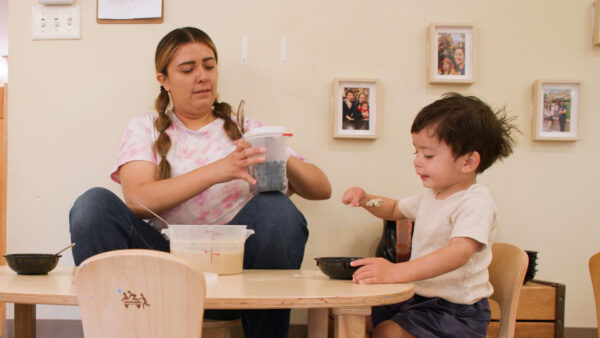
For example, a child may...
- Throw their food on the floor. When a caregiver says, “Keep your food on your plate, please. Are you done eating or do you want more?” the child shakes their head, then waits until the caregiver turns around to continue throwing food on the floor. The child stops throwing food as soon as they notice the caregiver has turned back around.
- Try to take a toy from another child. The caregiver brings over a book and a ball and asks the child what they would rather play with. The child takes a moment to settle down, takes the ball, and begins playing ball with the caregiver.
- Start to rush outside before getting sunscreen on. The caregiver says in Mandarin, “Hold on. We need to get some sunscreen on you. It’s sunny outside.” The child waits as the caregiver is looking for the sunscreen and follows the caregiver around.
- Notice their family member leaves during drop-off and cries. The care educator comforts the child and shows them the ball they were playing with yesterday, asking the child, “Want to play with the ball? When Grandpa comes back, he can play with you too! Is it okay if I play with you for now?” The child nods and slowly warms up to playing with the caregiver.
- Shake their head and say, “No-no,” as they go near a stool that the caregiver asked them not to climb on. The caregiver says, “The stool is not for playing on. You use it when you are going to wash your hands. Do you want to play cooking? Where’s your pan and spatula?” The child looks for the pan and spatula to play with.
- Picks up a cup to drink water. When the caregiver says, “Wait, please. Your cup needs a lid.” The child stops and looks at the cup and then gives it to the caregiver so the caregiver can put the lid on it.
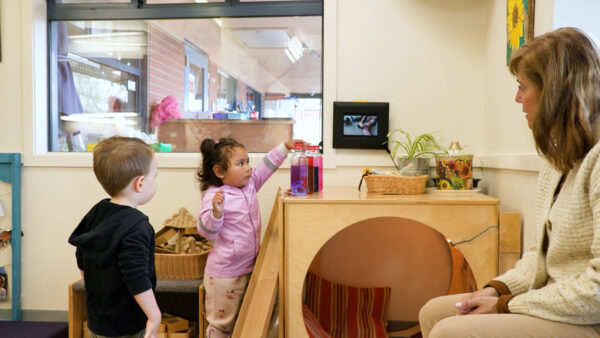
For example, a child may...
- Stop making a mess with their food when asked by the caregiver. The caregiver turns around to help another child. The child continues to listen to the caregiver and stops playing with their food, even though the caregiver is not watching them.
- Let a caregiver know when they are tired or thirsty by using gestures or short phrases.
- Approach a baby playing on the floor and, while looking at the caregiver, say, “Look at me!” as they gently touch the baby’s hand with a greeting. “Hi, baby!” The caregiver says, “Good job! You remembered to be gentle with the baby.”
- Wait their turn to try to blow bubbles, and the caregiver lets them know it’s their turn after one more child. The child may have some trouble ending their turn to pass the bubbles to the child next in line, but with caregiver support, they pass the bubbles.
- Play a game where they must listen to the commands of the bear puppet but not the dragon puppet. The child listens to the bear and sometimes to the dragon.
- Approach a caregiver and say, “I need to go potty.”
Note: This foundation is closely related to Foundation 1.4 Regulating Emotions and Behaviors in the Social and Emotional Development domain. Together, these foundations play an important role in how children learn to manage their behaviors and emotions.
Foundation 2.3Working Memory
Indicators
4–11 Months
Children look for people or objects that are hidden in front of them.
11–23 Months
Children keep in mind information about people or objects even when out of sight. Children also follow simple one-step directions with caregiver support.
23–36 Months
Children demonstrate the ability to keep simple rules or concepts in mind with caregiver support.
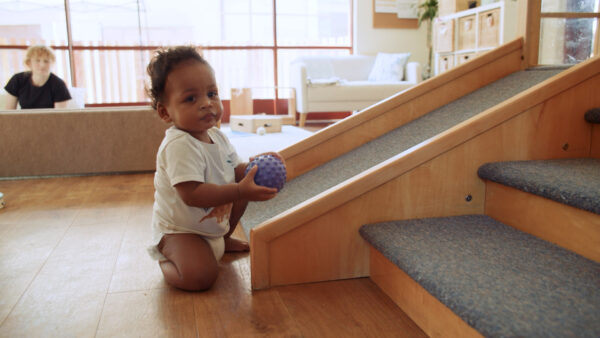
For example, a child may...
- Look for a ball that a person hid under a blanket in front of them and easily give up after not finding the ball quickly.
- Pull at a blanket that a person is using to hide their face behind during a game of peekaboo.
- Pick up and investigate a small basket after they see a person place a toy in it.
- Drop a spoon off of the high chair tray and then look for it on the ground.
- Put a toy under a blanket and then lift the blanket to see if the toy is still there.
- Laugh during a game of peekaboo.
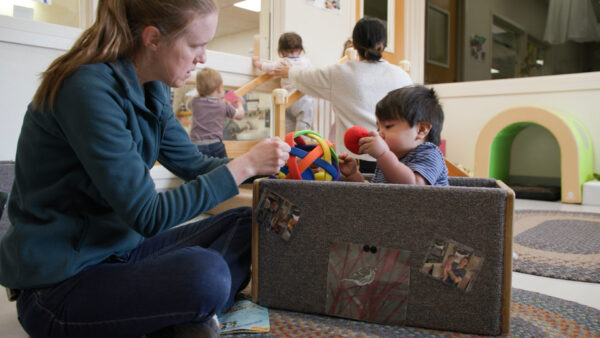
For example, a child may...
- Get a ball (although it is not in clear sight) when a person says, “The ball! Can you bring me the ball?” The child does not bring the ball to the caregiver and begins playing with it instead.
- Continue to look for a missing piece of a puzzle. They look and find the missing puzzle piece.
- Go to the kitchen to wash their hands when a caregiver says in Tagalog, “Time to wash our hands! We are going to get ready for mealtime.”
- Copy an adult putting books onto a shelf by also placing books on the shelf when the adult asks, “Can you help me put these books back?”
- Go to the reading area when a care educator says in Spanish, “It is time to read before our nap. Can you pick a book?”
- Grab a diaper when the person asks, “Can you give me the diaper? It’s time to change you!” while the child is on the changing table.
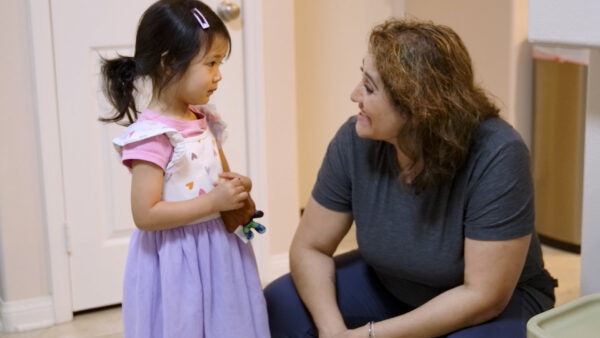
For example, a child may...
- Go to the ball bin and bring a caregiver the ball when they ask for it.
- Copy an adult as they sort different toys into bins and say, “Blocks go in there and balls go in here.” The child successfully imitates and places the blocks and balls in their corresponding bins.
- Grab their jacket and hat out of their cubby when a care educator asks them to get their clothes to go outside.
- Communicate to a care educator in American Sign Language (ASL), “I have this car at home,” when playing with a toy car outside.
- Hum the beat to a new song, like the “ABC song” or “Soualle” (Good Night, an African lullaby) as they learn to match the words to the song.
- Remember the rules of the freeze dance. The child stops dancing when the music stops.
Note: This foundation is closely related to Foundation 4.1 Long Term Memory in the Cognitive Development domain. Both foundations are important parts of memory and learning.
Foundation 2.4Cognitive Flexibility
Indicators
4–11 Months
Children explore objects and attend to things in their environment, changing the focus of their exploration when they notice something that interests them.
11–23 Months
Children are flexible in their attention and behaviors and adapt to changes in routine with caregiver support. Children also explore simple ideas during pretend play.
23–36 Months
Children shift attention and adapt behaviors in different situations. Children also engage in more complex pretend play.
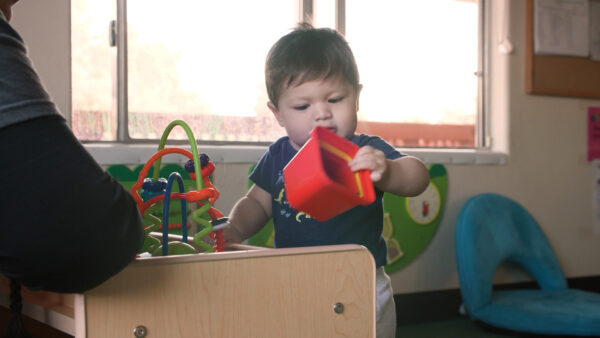
For example, a child may...
- Play with a toy phone.
- Shake a ball and then try to push it.
- Pull off a familiar person’s glasses and put the glasses in their mouth.
- Bring a spoon to their mouth with food then throw the spoon on the floor. When a caregiver reacts, the child laughs.
- Roll over to grab a toy. When the child rolls over, they notice a different toy and try to grab that toy instead.
- Dump blocks out of a transparent container before pushing the container across the rug.
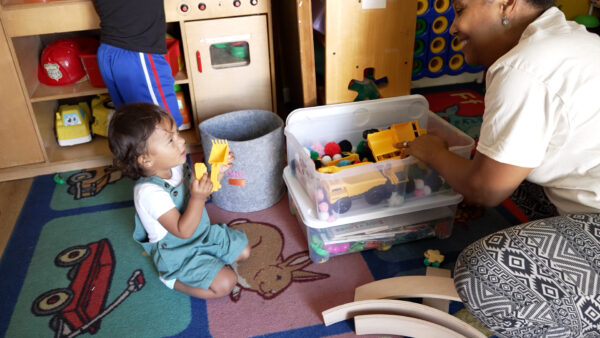
For example, a child may...
- Use a toy block as a phone by holding it to their ear.
- Pretend they are eating food or drinking out of a cup.
- Use their favorite cup during mealtime but when the cup is not available, switch to using a similar but different cup.
- Shift from playing and climbing on a toy ramp to sitting with their peers to sing a song, with support from a caregiver.
- Place a sippy cup they were using to drink out of upside down to see water or milk come out of it. When they notice a few drips, they begin to shake it.
- Play in the sand with a wooden spoon and then notice a child digging with their hands, so they begin to use their hands too.
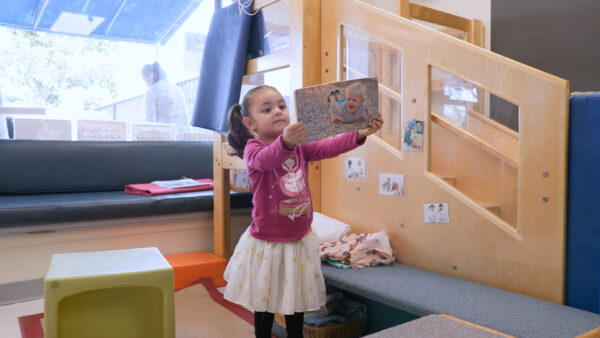
For example, a child may...
- Pretend to hold an invisible phone while “talking” to their dad and say in Spanish, “¡Hola papi! ¿Vamos a tienda?” (Hi daddy! Go to store?).
- Communicate goodbye to a family member in their home language during drop-off and then begin playing with another child, communicating in their shared home language.
- Use their assistive mobility device (such as an adaptive walker) to adjust their movements as they pass a big ball to another child. They ask for help when the big ball gets stuck and they are unable to pick it up.
- Use a toy broom to pretend to fly in the sky, then use the same broom to try to reach a ball that is stuck under the couch. When the broom does not work, the child seeks a caregiver for help.
- Place the red blocks in the red container and then switch to placing the blue blocks into the blue container.
- Concentrate on building a “ramp” with building blocks. When the ramp falls apart, they get a book and use that as a ramp like they saw their peer do the other day.
Strand 3.0Goal-Directed Learning
This strand describes how infants and toddlers develop problem-solving and collaborative effort skills. These skills support children in setting goals as they learn, working together with others, and finding ways to solve problems.
Age: Birth–4 Months
First Four Months
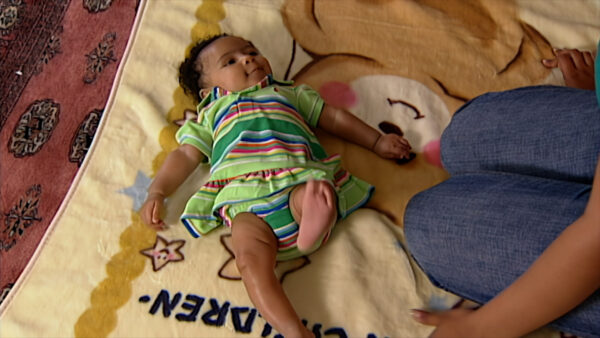
Within the first few weeks of life, young infants’ behaviors give us an insight into the early development of Goal-Directed Learning. Young infants use simple movements and vocalizations to explore the world and make their needs known. They reach for things in their immediate surroundings. When they want something or need help, they may cry or fuss to get what they want. As they move their body, they learn that they can make things happen with their movements too. These early movements and vocalizations are foundational for developing goal-directed learning. In the first four months, young infants may show emerging goal-directed learning by how they engage in the following:
- bring their hand or objects to their mouth
- try to reach toys by swinging their arms at them
- wiggle around and get to know their own space and body by moving their arms and legs
- cry or vocalize when they are hungry, tired, need comfort, or want an object
Age: 4–36 Months
Foundations for ages 4–11 months, 11–23 months, and 23–36 months.
Foundation 3.1Problem-Solving
Indicators
4–11 Months
Children use one or two simple actions to achieve simple goals or get their needs met.
11–23 Months
Children use trial and error to solve everyday problems with caregiver support. Children use gestures or simple phrases when they need help.
23–36 Months
Children use a variety of strategies to solve problems, such as asking for help when they need it and applying previously learned strategies to familiar and new situations.
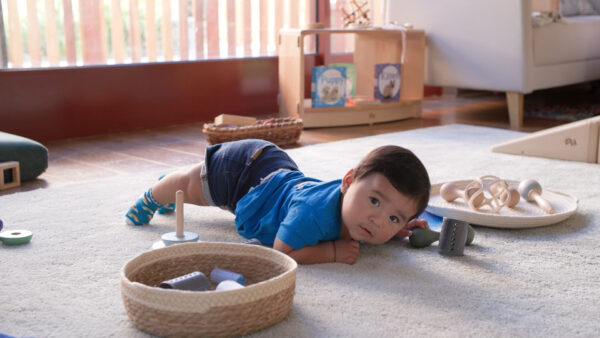
For example, a child may...
- Pull the string of a wooden toy to get it closer even when it gets momentarily stuck on something.
- Reach for a cup using their prosthetic hand. When they can’t reach the cup with that hand, they use their other hand.
- Reach for a rain-stick as it rolls away.
- Turn the sippy cup around to get the drinking spout in their mouth.
- Lift a rebozo (Mexican shawl-like cloth) to search for a toy that is hidden underneath.
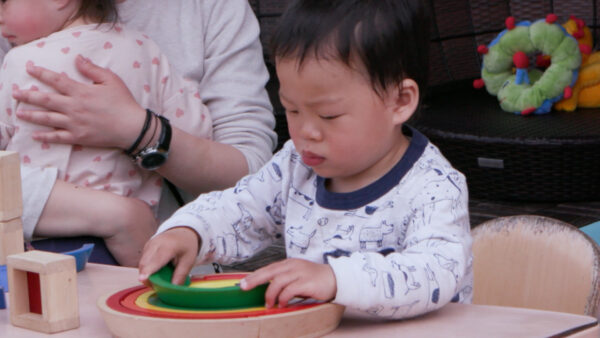
For example, a child may...
- Reach for a ball under the bookshelf. When they cannot reach the ball with their hands, the caregiver suggests that they use the handle of a toy broom to dislodge it. With the caregivers’ help, they dislodge the ball.
- Hand a care educator a puzzle piece that they are having trouble placing in the puzzle.
- Climb onto a chair and move their leg down to try to get off the chair. When they notice they cannot reach the ground, they seek a care educator for help.
- Try to fit toys into a big bowl. When the toys are spilling out of the top, they put the extra toys in another bowl when the caregiver suggests that idea.
- Look at a plate of food that is out of reach and then look at a caregiver and communicate “more.”
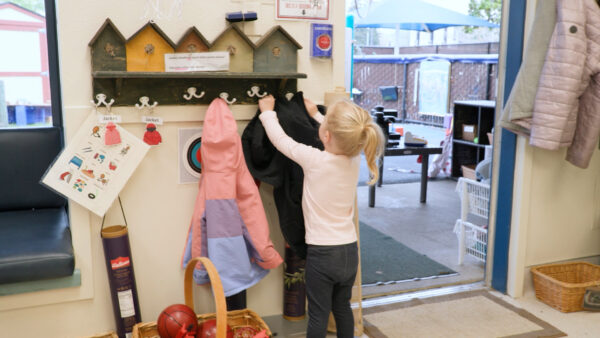
For example, a child may...
- Ignore the block that is much too short to reach a desired object and instead choose a long block that looks as if it may be long enough. Express joy when the long block works.
- Stack only the cubes with holes in them on the stacking post, ignoring the cube-shaped blocks without holes that got mixed into the bin.
- Use their augmentative and alternative communication (AAC) device to ask a caregiver to help move the train tracks over so that the child can build a block tower on the floor.
- Express joy as they work through a matching game and match objects of a similar color and shape with a caregiver.
- Climb up a new safe, age-appropriate playground after having observed another child carefully climb onto the playground.
Foundation 3.2Collaborative Effort
Indicators
4–11 Months
Children engage in interactions with caregivers and show interest in other children. Children also show an early understanding of others’ intentions and goals.
11–23 Months
Children engage with caregivers to accomplish simple goals. With caregiver support, they can sometimes play with other children in a coordinated way.
23–36 Months
Children play with each other and engage in shared activities to accomplish simple goals or tasks, with increasing independence.
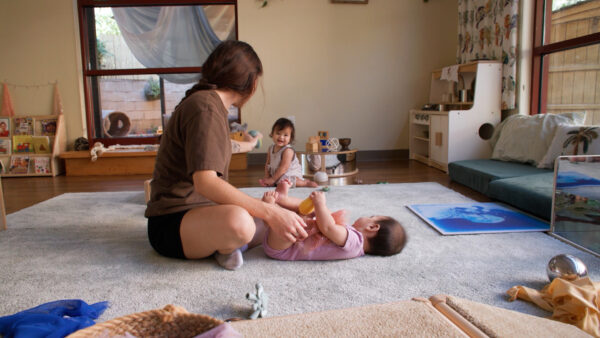
For example, a child may...
- Pay attention to a caregiver getting a bottle for another child who is crying.
- Move toward a familiar caregiver who is showing them a stuffed animal.
- Crawl toward a child who is lying on their tummy and watch them.
- Laugh when a person waves back to them and continue to wave to get them to wave back.
- Laugh when a person makes a silly, exaggerated facial expression.
- Clap with a care educator and other children.
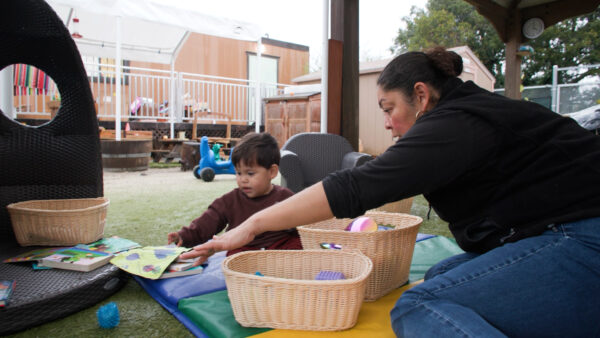
For example, a child may...
- Pick up a toy that a caregiver accidentally dropped on their way to the toy container during cleanup time and place the toy in the intended container.
- Roll a ball back and forth with another child and a caregiver.
- Give a caregiver a shape that the caregiver requests as they are placing shapes into a shape sorter.
- Grab a towel when the caregiver exclaims, “Oh no! A spill. I need a towel.” The child then claps after the caregiver cleans up the spill.
- Give another child a shovel in the sandbox when the caregiver communicates to the child, “Let’s all dig a hole. You have two shovels. Give one to your friend, please.”
- Grab a toy broom to help sweep when the caregiver says, “Clean-up time!” as they begin to sweep.
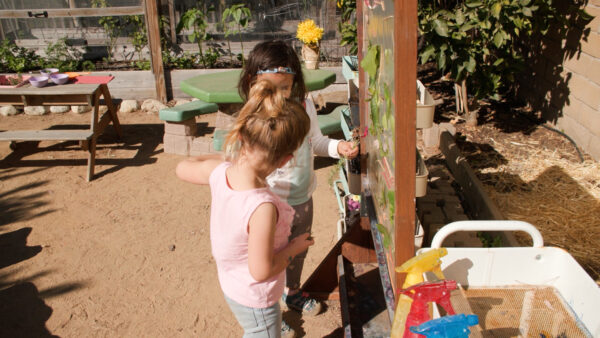
For example, a child may...
- Put blocks away with another child during clean-up time.
- Work with another child to pull a tricycle off the grass so they can ride it more easily.
- Communicate, “Let me try!” as they are trying to pull a drawer open with another child.
- Push a toy car down a ramp as another child is waiting at the bottom of the ramp to catch it.
- Twist a lid as hard as they can to remove it from a container. When that does not work, they take the container to an older child for help.
- Pass a block to another child as they build a tower together when that child communicates that they need another block.
Note: This foundation is closely related to Foundation 2.1 Social Understanding and Foundation 2.4 Interactions with Peers in the Social and Emotional Development domain. Together, these foundations are important for how children learn to actively work with others to accomplish goals.