
Domain
Perceptual and Motor Development
Perceptual Development refers to children’s ability to select, organize, and interpret information coming through their senses to understand the world around them. Motor Development describes children’s growing ability to control and move their bodies. Motor development skills include gross motor or fine motor skills. Although perceptual, gross motor, and fine motor development are often described separately, these three areas grow hand in hand.
Why is Perceptual and Motor Development Important?
The development of perceptual and motor skills is essential to children’s ability to interact with, understand, and respond to their environment. Infants and toddlers use perceptual information as part of their daily exploration and interactions with others. For example, infants and toddlers interpret sensory information when recognizing faces, objects, voices, and the sounds of songs and chants. Developing gross motor skills provides new opportunities for learning. For example, when children can move longer distances, either by scooting, crawling, walking or by using an assistive technology device, their ability to move around expands their access to places, people, and objects. Early fine motor skills, such as grasping, allow infants to explore objects and learn about them: what they look like, sound like, feel like, and can do. Gaining control of the muscles in the hands is also crucial for children’s activities of daily living.
What Skills and Knowledge are Described in the Perceptual and Motor Development Domain?
The skills and knowledge described in the Perceptual and Motor Development domain are organized into the following two strands:
- Perceptual Development
- Motor Development
Foundations for birth–36 months
Open the strands below to explore how the foundations apply to age periods birth–4 months, 4–11 months, 11–23 months, and 23–36 months.
Strand 1.0Perceptual Development
This strand describes the continuous process of taking in, organizing, and interpreting information drawn from the senses
Age: Birth–4 Months
First Four Months
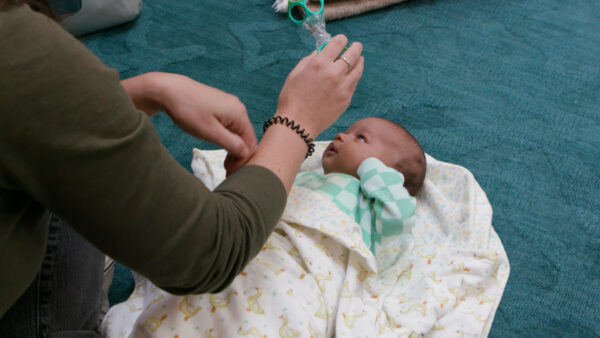
From birth, infants’ daily experiences of processing novel sounds, sights, sensations, smells, and tastes set the foundation for how they learn about their world. Through information from the senses, infants learn about people, routines, culture, languages, and much more. In the first four months, young infants may show skills related to Perceptual Development as they experience the following:
- respond by calming down when rocked, touched, or bounced
- track a moving face, person, or object with their eyes
- turn their head toward a loud sound
- react to changes in temperature (for example, is startled by cold water)
- maintain their vision on high-contrast objects, like books with black-and-white pictures or patterns
Age: 4–36 Months
Foundations for ages 4–11 months, 11–23 months, and 23–36 months.
Foundation 1.1Perceptual Development
Indicators
4–11 Months
Children use information from different senses to explore and learn about objects and people in their environment.
11–23 Months
Children use the information across different senses to plan actions and adjust the ways they explore and interact with objects, people, and environments.
23–36 Months
Children can quickly and easily use information across different senses to plan and accomplish tasks as part of play, social interactions, or daily routines

For example, a child may...
- Turn their head toward a caregiver who is singing a familiar comfort song in the child’s home language.
- Hold an object in their hand and switch from touching to mouthing to looking at the object as they explore it.
- Crawl or turn their body toward a familiar person who is calling their name.
- Place their hand on a touch-and-feel book to feel the different textures.
- React with their facial expressions and body movements when tasting new food.
For example, a child may...
- Touch something wet and wipe their hand on their clothes to dry off.
- Sway back and forth to the beat of a song.
- Walk without help on flat surfaces like the floor but switch to crawling when moving across a soft and uneven surface like a mat or couch cushion.
- Stop pouring sand into a bucket that is already full.
- Try to fit a shape into the correct hole on a shape sorter and is sometimes successful after turning the shape in the correct direction.
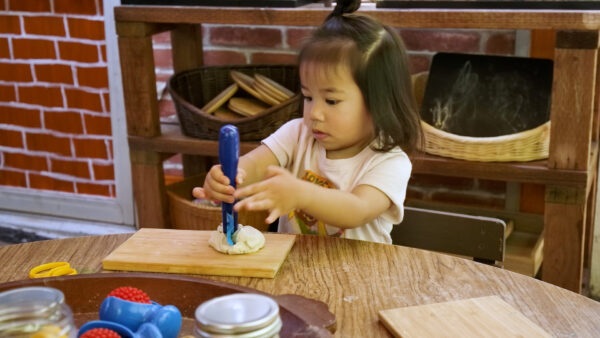
For example, a child may...
- Talk louder to another child when there is too much noise during playtime.
- Fit a shape into the correct hole in a shape sorter on the first try.
- Move slowly when holding a full cup that might spill.
- Press harder on a clump of clay than on play dough.
- If the child is blind or has low vision, use their hands and arms to touch and detect obstacles in their way and adjust their reach accordingly while reaching for a water bottle.
Strand 2.0Motor Development
This strand describes changes over time in children’s ability to control and move their bodies.
Age: Birth–4 Months
First Four Months
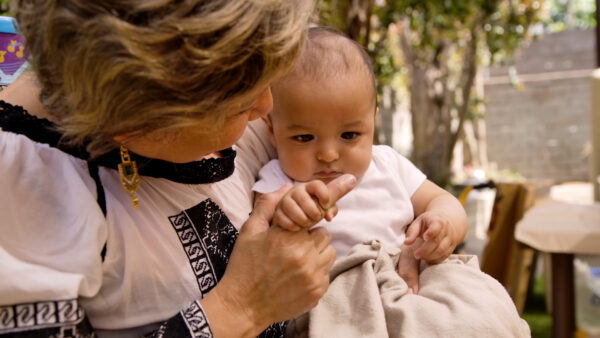
Early on, infants’ motor skills focus on gaining basic control and strength of their larger muscles (head, arms, and torso) through spontaneous, repetitive, uncontrolled movements (wiggling, flailing, and bouncing). These movements help strengthen muscles and allow infants to explore their body’s capabilities. At the same time, infants are also gradually gaining control of their smaller muscles (hands and fingers). At birth, it’s common for infants to have tight, closed fists. Over time, they open their hands more often, and they slowly gain more control over their individual fingers. In the first four months, young infants may show early motor skills as they engage in the following:
- move both arms and legs spontaneously
- open their hands more frequently (from usually closed, tight fists)
- hold their head steady when sitting with support
- touch a nearby object with their hands when waving their arms
- grasp and hold on to an object placed directly in their hand
- bring their hands and objects to their mouth to explore how they feel
- lift their head (or push up on elbows) when placed on tummy
Age: 4–36 Months
Foundations for ages 4–11 months, 11–23 months, and 23–36 months.
Foundation 2.1Gross Motor Development
Indicators
4–11 Months
Children develop increasing control of large muscle groups, such as their neck, arms, torso, and legs, helping them maintain or change positions or move short distances.
11–23 Months
Children coordinate large muscle groups to move from one place to another, adjusting their movement as needed to adapt to different surfaces and places.
23–36 Months
Children demonstrate increasingly complex ways of coordinating their large muscle groups to move and explore in various ways (such as running, jumping, dancing).

For example, a child may...
- Roll from back to tummy or from tummy to back without help.
- Sit upright, initially sitting with the support of an object or a person.
- Show signs of wanting to move short distances, like shuffling on their bottom while on the floor or pulling themselves along on a mat while on their tummy.
- Crawl on hands and knees for short distances.
- Hold on to nearby furniture or a familiar person to help pull themselves up to stand and take a few steps.
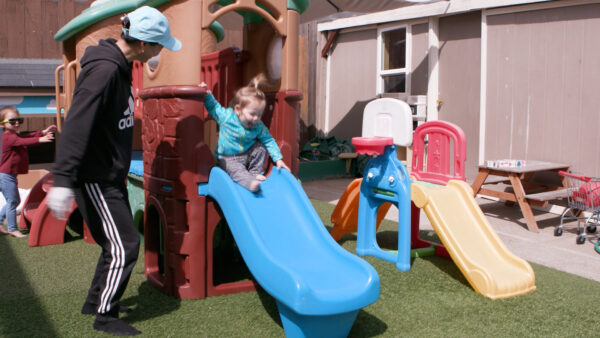
For example, a child may...
- Crawl across a room on hands and knees to reach a familiar person.
- Walk or “cruise” while holding on to furniture or a familiar person’s hands.
- Use an assistive mobility device (such as an adaptive walker) to walk on a sidewalk.
- Walk across a room without holding on to anything.
- Climb up and down a couch, with some help from a familiar person.
- Run in short bursts as part of playing.
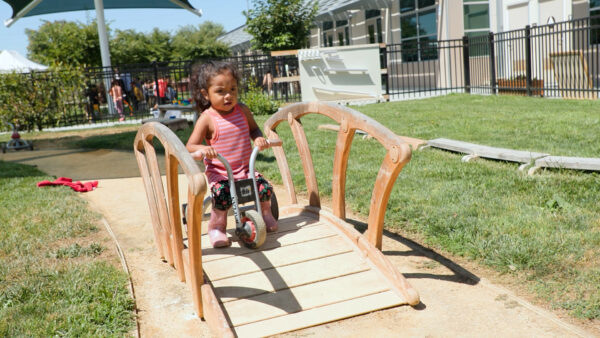
For example, a child may...
- Walk up and down the playground steps.
- Jump with both feet off the ground.
- Participate in dance time by waving their arms, shaking their head, and/or moving their wheelchair in different directions.
- Try to kick a ball toward their friend, with some success.
- Run longer distances as part of playing.
- Use an assistive mobility device (such as an adaptive walker) to walk over uneven outdoor surfaces like grass.
Foundation 2.2Fine Motor Development
Indicators
4–11 Months
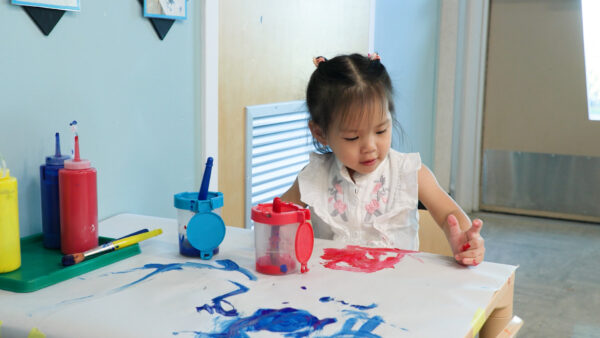
Children use their hands and fingers to explore objects through activities like reaching, grasping, shaking, banging, and poking.
11–23 Months
Children use both hands, together, to manipulate objects.
23–36 Months
Children use both hands together to manipulate objects and tools in intricate ways, allowing them to accomplish tasks more precisely and efficiently as part of play and learning.
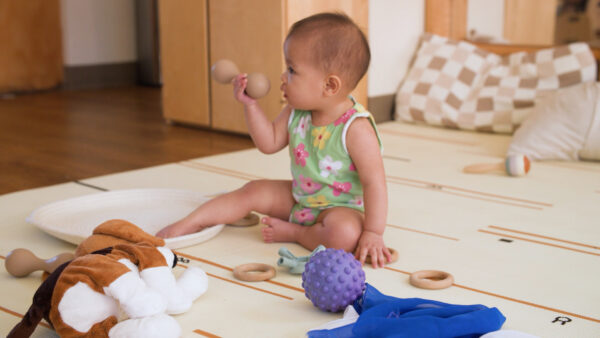
For example, a child may...
- Hold on to a rattle after it is placed in their hand and shake it to make a sound.
- Reach and grasp a block in front of them with one of their hands.
- Bring both hands together in front of them to hold a big stuffed animal.
- Hold a small cup in one hand and explore by banging it on a surface, turning it, mouthing it, or moving it to their other hand.
- Use their whole hand to press down on a button of a pop-up box toy.
- Use their whole hand to pick up large food pieces to eat.
- Hold an object in one hand and use the other hand to touch or poke it.
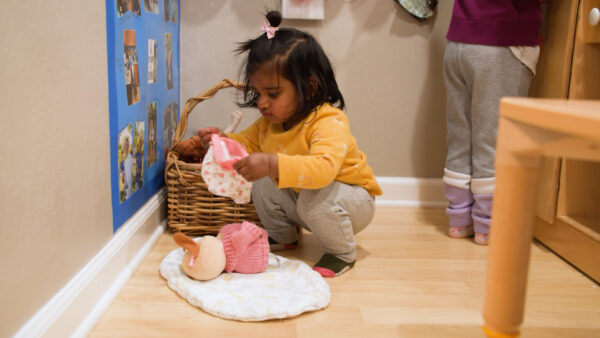
For example, a child may...
- Use their thumb and index finger to pick up small pieces of food to eat.
- Turn pages of a board book, sometimes turning more than one page at once.
- Press an adaptive switch to activate a toy that moves and makes sounds.
- Hold a cup in one hand and use their other hand to pull out an object that is stuck inside of it.
- Scribble on a paper using a thick crayon or a crayon with an adapted foam grip, sometimes holding the paper down with their other hand.
- Use one hand to stack a ring on a post, while holding the post with the other.
- Use both hands to hold a cup and drink from it, while sometimes spilling the cup’s contents.
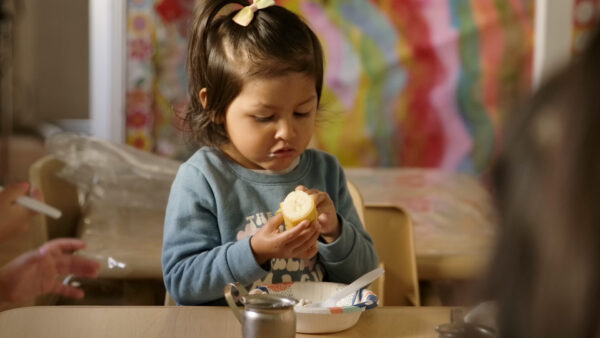
For example, a child may...
- Use one hand to hold a bottle and their other hand to unscrew the lid.
- Turn pages of a book one at a time.
- Use an age-appropriate spoon or adaptable grip spoon to feed themselves.
- Build a tower using multiple blocks.
- Fold a piece of paper in half, making a crease.
- Draw some simple shapes that resemble, for example, lines or circles.
- Bang along to a song on their drum, with one hand holding the drumstick and the other hand holding the drum.